THE INTENTIONAL MAN
A Newsletter for the Considered Man
The Five Pieces That Do All the Work
How a wardrobe hierarchy makes every other purchase easier
The Central Idea
Most men shop for outfits. They buy a jacket that works with the trousers they already own, or a shirt because it looked good on the mannequin next to a pair of jeans they don't have. The wardrobe grows by accumulation — individual pieces that may or may not talk to each other — and then the closet is full but nothing works.
The alternative is building from a hierarchy.
A wardrobe hierarchy has three layers. At the base: anchor pieces — five or six garments with the highest versatility-to-specificity ratio in the building. They are worn constantly, with almost everything, and their neutrality is a feature, not a failure of imagination. Above them: supporting pieces, which pair with anchors in specific combinations but not freely with everything. At the top: statement pieces, which make an entrance but pair with almost nothing.
Most men have too many statement pieces and not enough anchors. The fix isn't more shopping — it's identifying exactly which five items your current wardrobe is missing at the base.
The five anchors are not universal. But for most men, in most climates, living most lives, they are some version of these:
1. A straight-cut dark-wash denim. Not slim. Not wide. Not distressed. Dark enough to pass in a business-casual context, straight enough to work with both a Chelsea boot and a trainer. The most versatile bottom garment in menswear, provided you get the rise and the leg opening right.
2. A white Oxford button-down. Not a dress shirt — the Oxford weave is the key. Soft enough to wear open-collar with jeans, structured enough to take a tie. Tuck it, half-tuck it, or leave it out — it shifts register without becoming a different shirt.
3. A mid-weight crewneck in a neutral. Charcoal, oatmeal, navy, stone — pick one. 280–320gsm, so it sits between a spring layer and a winter necessity. This is the piece you reach for eleven times before thinking about it.
4. A dark trouser in a non-denim fabric. Olive, charcoal, or navy in cotton, linen, or a light wool blend. This piece is what separates men who dress from men who just wear clothes. It signals intentionality without effort.
5. A single pair of leather shoes worth caring for. Not trainers, not boots — a low Derby or a Chelsea in brown or tan. Brown leather is more versatile than black; it works with navy, olive, grey, and stone in ways black leather simply doesn't.
That's the base layer. Every other piece in the wardrobe earns its place by pairing with at least two of these five.
What's Relevant Right Now
March is the month that exposes wardrobe gaps fastest. You're done with heavyweight winter pieces but not yet in summer territory, and every morning you stand in front of the closet reaching for something that doesn't exist. That gap is almost always in category four or five above — a non-denim trouser or a proper leather shoe.
The brands doing the non-denim trouser well right now: Corridor for cotton-linen blends, Universal Works for the relaxed Aston pant, Incotex for anyone willing to spend on a light wool. All three offer the same proposition: a trouser that reads elevated without requiring a jacket to justify it.
For the leather shoe: the Loake Aldwych Derby sits at the value ceiling of the accessible end — it's the last pair most men need to buy in that silhouette for a decade.
Outfit of the Day
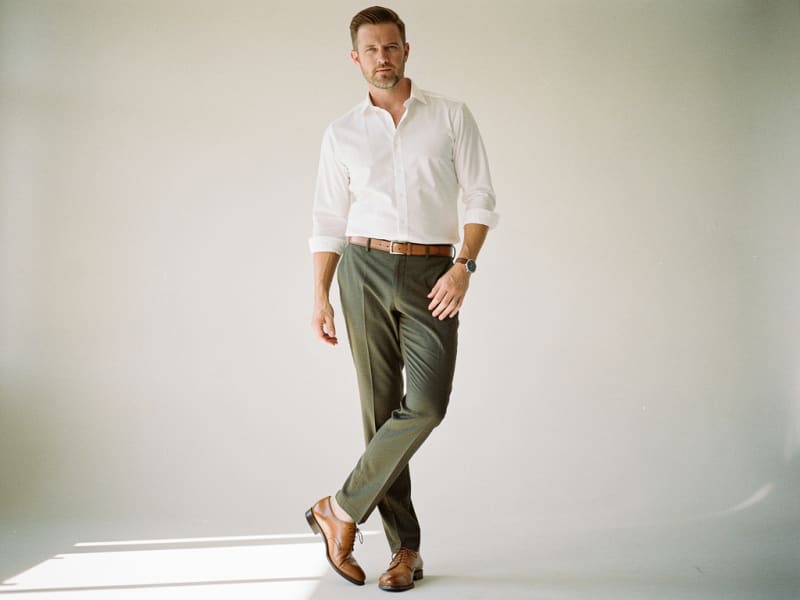
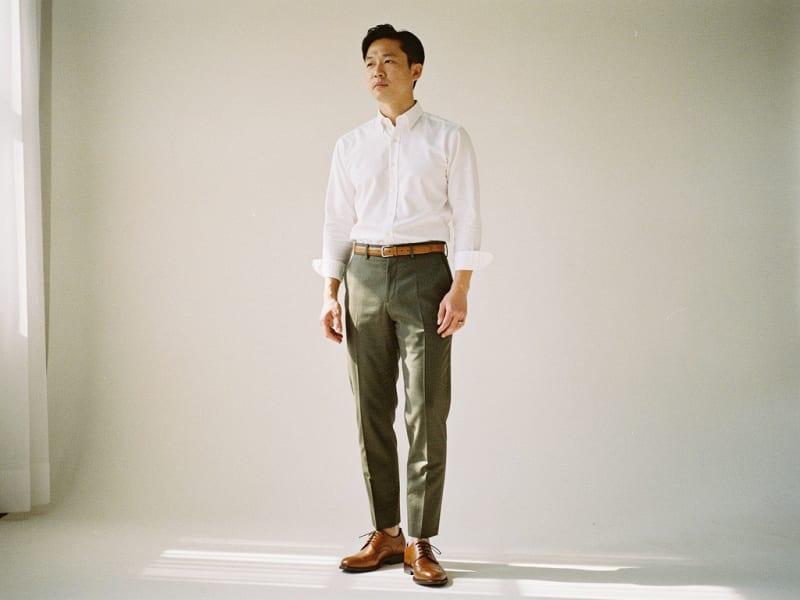
The brief: dress around anchor four and five — the dark trouser and the leather shoe — without a jacket. It should read deliberate, not corporate.
Trousers: Dark olive tapered cotton-linen, mid-rise. The linen content keeps it from reading too formal; the olive separates it from the expected navy or grey.
Shirt: White Oxford button-down, tucked cleanly. No half-tuck here — the tuck is part of the structure.
Shoes: Tan leather Derby. The contrast between the olive trouser and the tan shoe is the pivot of the outfit. Don't close that gap with a dark shoe.
Belt: Tan leather, matching the shoe. Not identical — a slight variation in finish is fine and often better than a perfect match — but tonally consistent.
No outer layer. This is a 16°C outfit: the OCBD is enough above 14°C, and this is the season for believing the forecast.
The Look


This Week's Single Action
Open your wardrobe and identify which of the five anchor pieces you're missing or under-serving. Not which you'd like to buy — which one, if present in good quality, would unlock the most combinations you currently can't build.
Write it down. That's your next single purchase. Don't buy anything else until you have it.
Style Vocabulary
Wardrobe hierarchy — the three-tier structure of a functional wardrobe: anchor pieces (high versatility, worn constantly), supporting pieces (mid-versatility, worn in specific combinations), and statement pieces (low versatility, worn rarely). Understanding which tier a garment occupies before buying it prevents the most common wardrobe failure: accumulating statement and supporting pieces while the anchor tier remains underdeveloped.
Next Issue
We've established the base layer. Next issue: a full examination of the white Oxford button-down — why most men own the wrong version, what to look for in a collar roll, and the one alteration that makes a $60 shirt wear like a $200 one.